
Wavelength Division Multiplexing Wdm Based
Search optical fiber, connectivity, cable management and network infrastructure references.
- Wavelength
- Division
- Multiplexing
Articles and technical references
8 on this page-
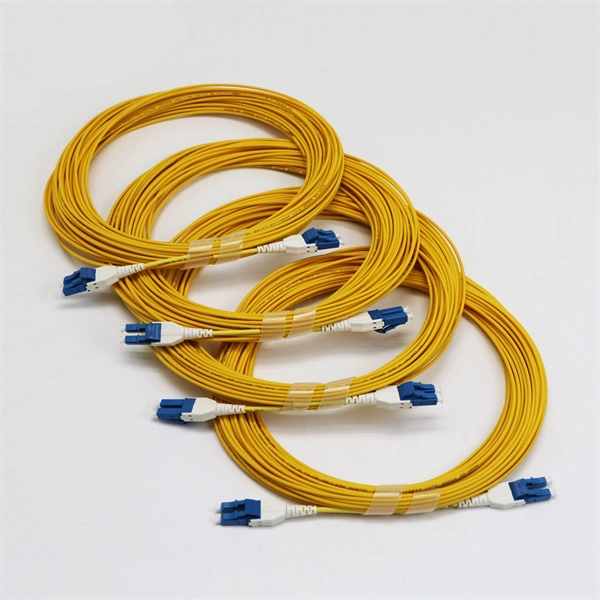
Channel based on wavelength division multiplexing principle
Wavelength division multiplexing (WDM) is a technique of multiplexing multiple optical carrier signals through a single optical fiber channel by varying the wavelengths of laser lights. WDM allows communication in both the directions in the fiber cable. In WDM, the optical...
-
Common Wavelength Division Multiplexing WDM Technologies
Wavelength Division Multiplexing – WDM, coarse, Wavelength division multiplexing is a multiplexing technique working in the wavelength domain. It is common.
[PDF Version]
-
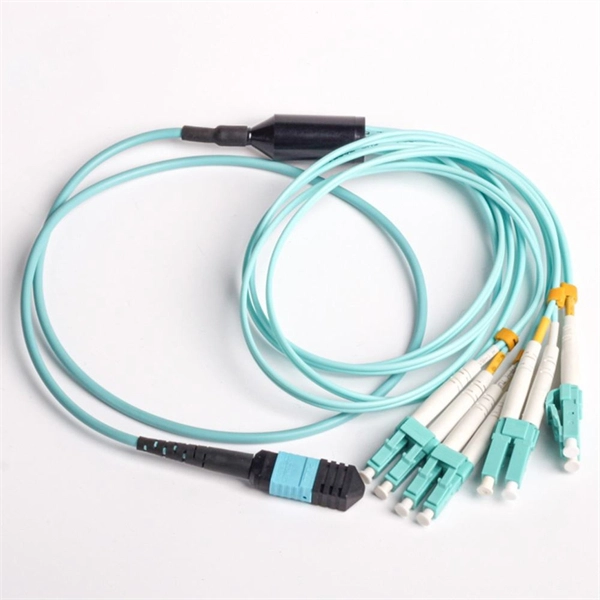
Wavelength Division Multiplexing Decoder
WDM systems are divided into three different wavelength patterns: normal (WDM), coarse (CWDM) and dense (DWDM). Normal WDM (sometimes called BWDM) uses the two normal wavelengths 1310 and 1550 nm on one fiber. Coarse WDM provides up to 16 channels across multiple transmission...
[PDF Version]
-

Wavelength Division Multiplexing and Multimode Technology
WDM systems are divided into three different wavelength patterns: normal (WDM), coarse (CWDM) and dense (DWDM). Normal WDM (sometimes called BWDM) uses the two normal wavelengths 1310 and 1550 nm on one fiber. Coarse WDM provides up to 16 channels across multiple transmission...
[PDF Version]
-
Principles of Beam Splitters and Wavelength Division Multiplexing
In fiber-optic communications, wavelength-division multiplexing (WDM) is a technology which multiplexes a number of optical carrier signals onto a single optical fiber by using different wavelengths (i.e., colors) of laser light. This technique enables bidirectional...
[PDF Version]
-

Wavelength Division Multiplexing for Transmitting Digital Signals
Wavelength Division Multiplexing (WDM) stands out as a cornerstone, enabling multiple data streams to travel simultaneously over a single fiber. This guide delves into the principles, types, applications, and future trends of WDM. The concept of WDM was arrived in 1970.
-
Protection of Wavelength Division Multiplexing Networks
In this paper, we address the problem of single link failure in WDM networks by comparing different protection methods when applied to the RDR strategy. We investigate and compare three algorithms that are mostly intended for maximization of the amount of remaining bandwidth...
-
Latest Technology in Optical Communication Wavelength Division Multiplexing
Stanford researchers have developed a novel, inverse-designed wavelength division multiplexer (WDM) that integrates high-performance Bragg gratings for use in optical communication systems. Current solutions are limited by trade-offs between channel spacing, crosstalk...
[PDF Version]